From “Goeiemoggel” to hard-nosed e-commerce
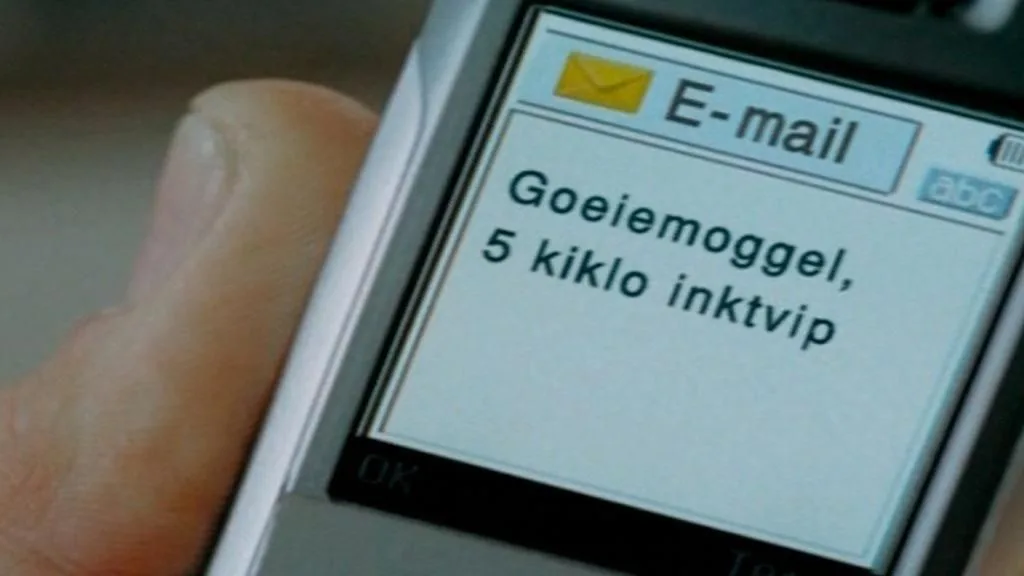
Ask a marketer about iconic Dutch advertising campaigns and chances are the same examples come up. De Paarse Krokodil. Goeiemoggel. Even Apeldoorn bellen, or Hans Anders.
Strikingly, we don't remember these campaigns because they achieved the highest conversion rate or because they were perfectly optimised. We remember them because they tapped into something human. A recognisable frustration, a cultural shift or a sense of humour that many people shared. They became part of conversations at the office, around the kitchen table and at birthday parties.
Campaigns like that seem less visible these days. Not because creativity has disappeared, but because marketing has fundamentally changed.
Over the past fifteen years, digital marketing has become far more professional. Where marketing used to be judged mainly on reach and brand awareness, organisations today steer on ROAS, CPAs, conversion rates and attribution models. Performance marketing has brought more insight, more control and more predictable results.
That has undoubtedly been a positive development. At the same time, it has led many organisations to focus more and more on optimisation, while the message itself sometimes fades into the background.
That is exactly why we see an interesting development emerging. The most successful campaigns right now are rarely purely brand-driven or entirely performance-driven. They deliberately combine both disciplines and understand that each part plays its own role within the bigger picture.
Where traditional advertising campaigns used to be responsible for both attention and sales, those roles are increasingly divided today.
On one side is performance marketing. A discipline focused on measurable results, lead generation, revenue growth and scalability. On the other is brand building, which is about recognition, positioning and creating a preferred position in the minds of the target audience.
That distinction seems logical, but it has major consequences for the way campaigns are developed.
Performance marketing is particularly effective when demand already exists. People are actively looking for a solution, click on an ad and convert. But performance usually doesn't create that demand itself. That is precisely where the strength of brand campaigns lies. They make sure a brand is already known before someone starts actively searching.
When we look at organisations that have grown successfully for years, we almost always see a combination of both. Brands like Nike, Coolblue or Bol don't just invest in conversion-driven marketing; at the same time they build recognisable campaigns, consistent brand stories and a clear positioning.
The most important lesson for modern marketers is therefore that branding and performance are not competitors. They are two systems that reinforce each other.
A common pitfall in modern marketing is that campaigns are conceived from a channel. Something has to happen on LinkedIn. There's budget available for video. Or there needs to be a TikTok campaign.
Although the thinking is understandable, strong marketing usually comes about in a different way.
The campaigns people still remember years later almost never started with a single medium. They started with a shared feeling or insight.
De Paarse Krokodil was essentially an observation about bureaucracy. “Goeiemoggel” played on the rise of text-speak. The strength wasn't in the chosen channel, but in the fact that people recognised themselves in the message.
That principle still holds today. In fact, now that consumers are exposed to thousands of commercial messages every day, a strong idea only becomes more important.
Before thinking about media planning, targeting or ad formats, it is therefore wise to answer one question first: what insight makes this campaign relevant to the target audience?
No topic has occupied the marketing world over the past few years as much as AI.
Content is produced faster, ad copy is generated automatically and image creation can, in some cases, take just a few minutes. That offers huge opportunities for marketers who want to test, optimise and scale faster.
Yet this is also where an interesting misconception arises.
Many organisations see AI as a replacement for creativity, while in practice it mainly turns out to be an accelerator of production.
Almost every organisation now has access to the same AI tools. As a result, what sets you apart is shifting further and further from the execution to the idea behind the campaign. A good prompt doesn't make a strong positioning. An automatically generated visual doesn't make a campaign concept.
That is why the most successful marketing teams mainly use AI to make production processes more efficient. Strategy, positioning and creative direction remain areas where human experience, intuition and context play an important role.
A question that comes up more and more in campaign development is when AI content is good enough and when human creation is preferable.
For many performance campaigns, AI is now an excellent tool. Think of ad variations, product visuals, A/B tests or social content that needs to be produced quickly. In situations like these, it's often about speed, scalability and optimisation.
As soon as authenticity becomes an important part of the message, however, we often see a different trade-off.
In employer branding, candidates want to see real colleagues. In customer cases, prospects want to hear real customers. And with thought leadership, people expect there to be genuine expertise behind the message.
Precisely because synthetic content is becoming ever more accessible, the value of authentic content is increasing. Modern campaigns therefore often make deliberate use of both. AI where efficiency matters, human creation where trust and credibility are central.
Another important development is that campaigns increasingly consist of more than one big moment.
Where traditional campaigns often revolved around a TV commercial, radio spot or print ad, modern campaigns look much more layered. They consist of a series of touchpoints that tell a story together.
A campaign might start with a video that generates attention. The target audience is then reached again through social media. Search captures active interest, while e-mail and marketing automation take care of further follow-up.
Each channel plays a different role.
Video creates reach and emotion. Social drives interaction. Search responds to existing intent. CRM strengthens the relationship and supports conversion.
That is why the most successful media plans are not built around individual ads, but around the entire customer journey.
Performance marketing has taught us to look critically at results. That may well have been one of the biggest advances in the field. At the same time, there is a risk in steering solely on direct conversions.
After all, not all the value of a campaign shows up directly in a dashboard. Brand awareness, brand preference and mental availability often develop over a longer period. Yet it is precisely those factors that often determine future growth.
That is why more and more mature marketing organisations look beyond conversions at indicators such as branded search volume, direct traffic, returning visitors and share of search. These signals show whether a campaign is not only delivering results, but actually winning a place in the minds of the target audience.
In the end, that is what the best-known campaigns of the past were so good at. People remembered the message long after the campaign had ended.
Today's best media campaigns don't choose between branding and performance. They understand that both disciplines serve a different function and create the greatest effect together.
They use performance marketing to turn demand into results efficiently. At the same time, they invest in campaigns that create recognition, preference and distinctiveness. They use AI to produce faster, but keep investing in creative concepts that people actually remember.
Perhaps that is the most important lesson for modern marketers. Technology, data and automation have moved the profession forward enormously, but in the end successful marketing is still about people.
And people rarely remember a dashboard.
They remember a good story, a strong campaign or a moment in which they recognised themselves. Just like those campaigns we can still quote effortlessly years later.